



Ane Bernhoft
f. 1973
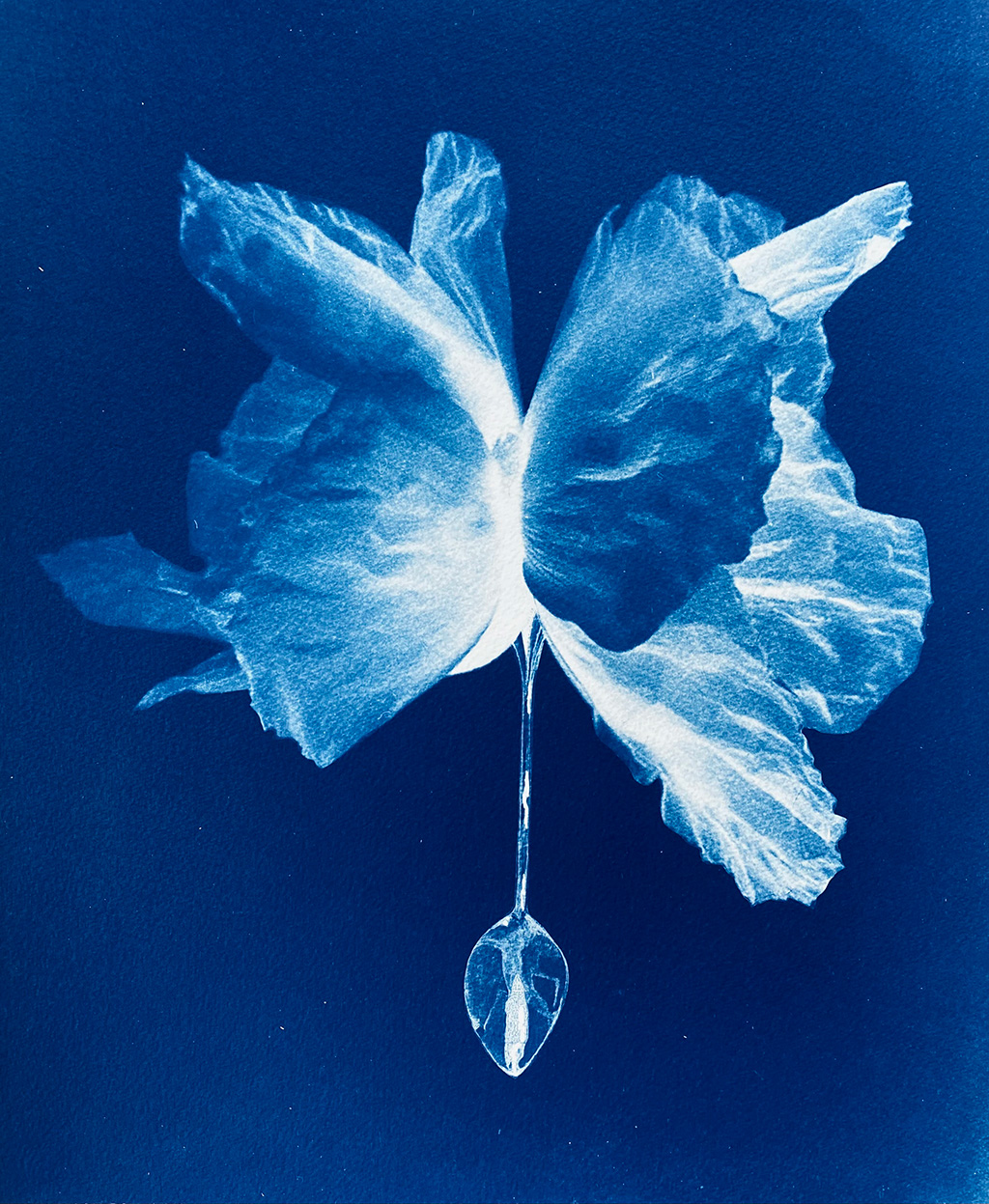
Ane Bernhoft arbejder med cyanotypi og skaber unikke værker med afsæt i den historiske fotografiske teknik, også kendt som blueprint.
Cyanotypien stammer tilbage fra 1842 og bygger på en lysfølsom emulsion, der eksponeres i sollys eller kunstigt UV-lys. Ved at placere objekter direkte på det behandlede papir opstår karakteristiske aftryk i cyanotypiens dybe blå nuancer.
Lyset spiller en afgørende rolle i processen og har stor betydning for motivets klarhed og kontrast. Når Bernhoft arbejder med sollys, bliver naturens omskiftelighed samtidig en aktiv del af værkets tilblivelse:
“Jeg er ikke selv herre over resultatet – det er naturens kræfter, der spiller ind. Går der en sky for solen, skal eksponeringstiden forlænges, og så er det uvist, om motivet står klart frem.”
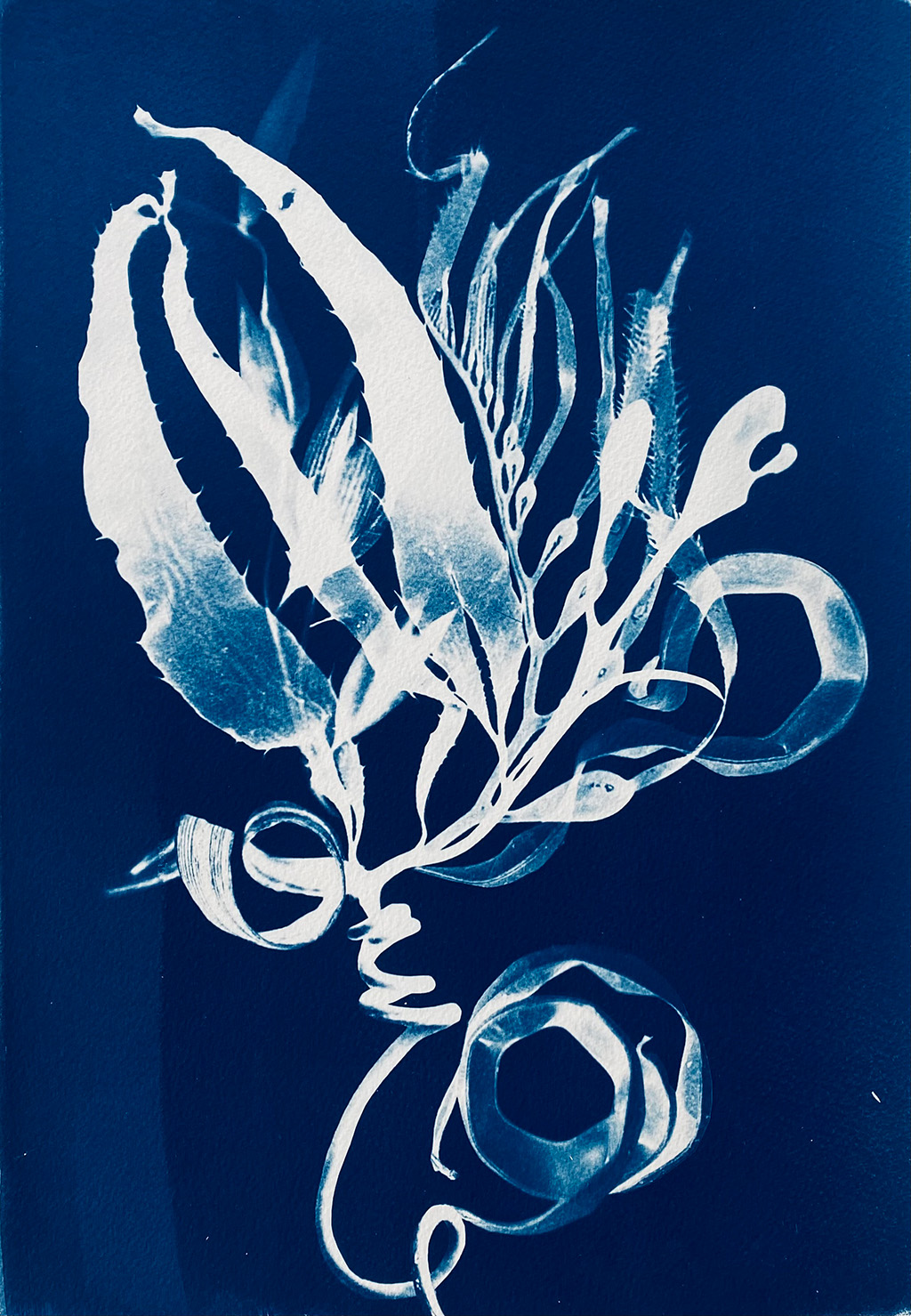
Bernhofts motiver kredser om livet under havets overflade og udspringer af en fascination af den skønhed og mystik, der gemmer sig i dybet – en verden, vi som mennesker kun har begrænset adgang til og kendskab til.
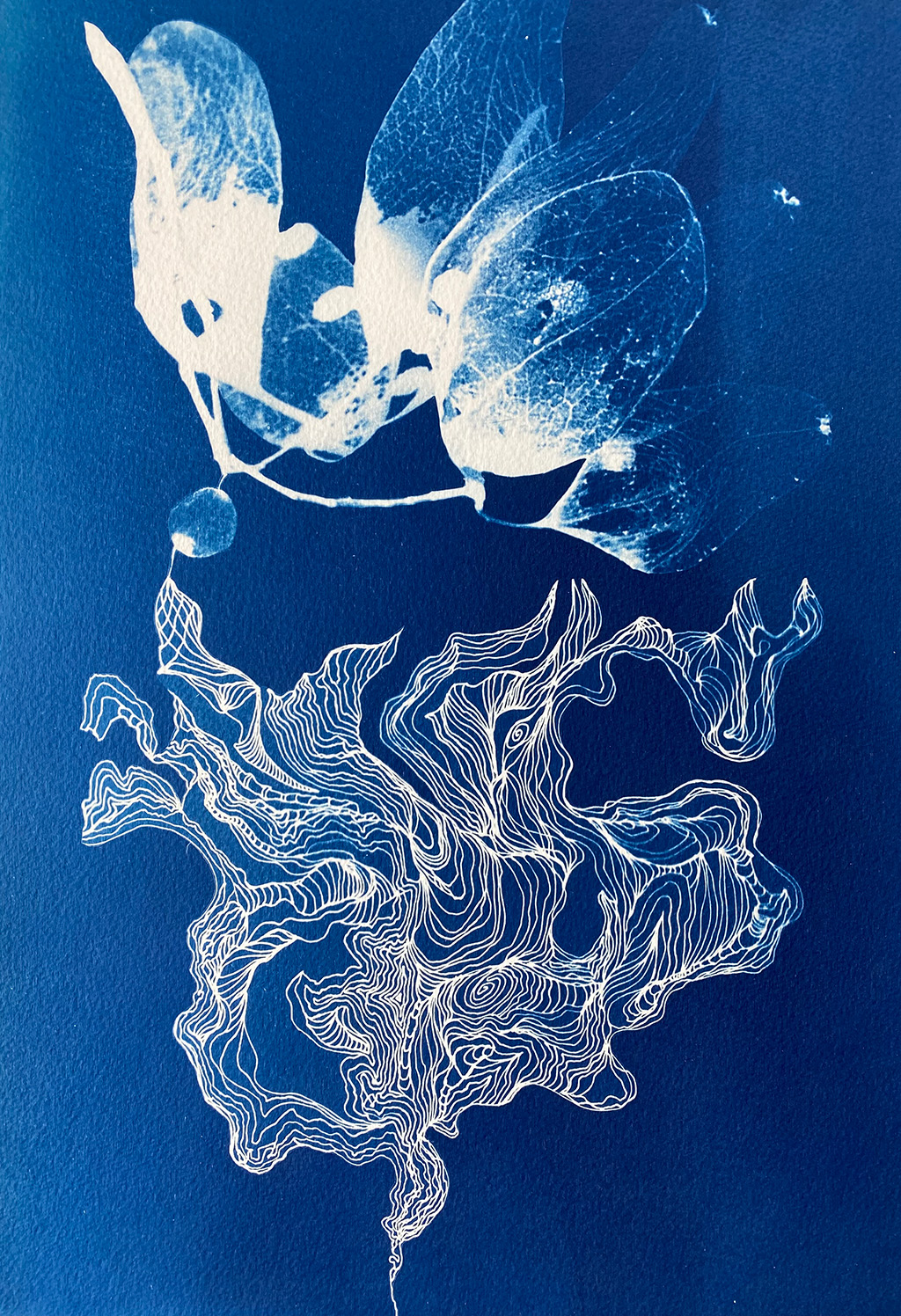
I værkerne genfortolker hun velkendte havplanter og organiske former, så naturen fremstår manipuleret og næsten fremmedartet. Motiverne bygges op af fotografier, tegninger og fundne objekter, der tilsammen skaber nye botaniske og undersøiske universer.
Ane Bernhoft er uddannet billedkunstlærer og har studeret kunsthistorie ved Københavns Universitet samt kunst i San Francisco og Paris. Derudover har hun gennem uddannelser og kurser i Danmark og udlandet arbejdet med blandt andet tegning, maleri, collage og tryk og løbende udviklet og forfinet sine kunstneriske teknikker.
Instagram: @ane.bernhoft
b. 1973
Ane Bernhoft works with cyanotype, creating unique works based on the historic photographic process also known as blueprint.
Dating back to 1842, cyanotype uses a light-sensitive emulsion that is exposed to sunlight or artificial UV light. By placing objects directly onto the treated paper, distinctive impressions emerge in the deep blue tones characteristic of the cyanotype process.
Light plays a crucial role in the process and has a significant impact on the clarity and contrast of the image. When Bernhoft works with sunlight, the changing conditions of nature become an active part of the creation of the work:
“When I use sunlight, I am not entirely in control of the result – the forces of nature come into play. If a cloud passes in front of the sun, the exposure time has to be extended, and it becomes uncertain whether the image will emerge clearly.”
Bernhoft’s motifs revolve around life beneath the surface of the sea and stem from a fascination with the beauty and mystery hidden in its depths – a world to which we, as humans, have only limited access and knowledge.
In her works, she reinterprets familiar marine plants and organic forms, transforming nature into something manipulated and almost otherworldly. Her compositions combine photographs, drawings and found objects to create new botanical and underwater